4546 E Meadowhill Ave, Anaheim, CA 92807

Is Your Pool Pump Dying? 15 Warning Signs That Could Save You $1,500

📋 Quick Navigation → Sounds of Death → Visual Warning Signs → Performance Issues → Age-Related Symptoms → Death Timeline → 5-Minute Test → Repair vs Replace → Emergency Signs → Brand-Specific Signs → FAQs 🚨 Pump Making Strange Noises? Call (714) 904-8575 for Emergency Diagnosis How to Tell if Your Pool Pump is Dying? 15 Warning Signs Orange County Homeowners Can’t Ignore A dying pool pump shows clear warning signs 3-6 months before complete failure. Listen for screaming bearings, watch for shaft seal leaks, monitor declining water flow, and check for overheating. In Orange County’s harsh conditions, catching these signs early saves you from a $1,500 emergency replacement during peak swim season. Last Tuesday in Laguna Beach, a customer called about a “slightly loud” pump. When I arrived 20 minutes later, the pump had seized completely – motor smoking, capacitor blown, total loss. His neighbor had the exact same pump making the exact same noise for two weeks but called us immediately. We replaced his bearings for $295. The difference? $295 repair vs $1,400 replacement. Dying pumps give warnings – you just need to know what to look for. 🚨 Quick Answer: Is Your Pump Dying? Your pump is DYING if you notice ANY of these: – Screaming/squealing that gets louder over time – Water leaking from pump body (not connections) – Breaker trips more than once a week – Flow reduced by 30% or more – Motor too hot to touch after 1 hour – Pump loses prime daily The Sounds of a Dying Pool Pump Sound What’s Dying Time Until Death Repair Cost Ignore It Cost Low humming Capacitor weakening 2-6 months $125-150 $600 motor High-pitched squeal Bearings failing 1-3 months $250-350 $1,400 pump Grinding/scraping Impeller hitting volute 2-4 weeks $200-300 $800 housing damage Clicking/ticking Relay or contactor 1-2 months $150-200 Electrical fire risk Loud vibration Mounting bolts/base 3-6 months $100-150 Cracked housing Gurgling/surging Air leak/cavitation 1-3 months $75-200 Impeller damage Warning: The “death scream” – an unbearably loud screech – means bearings have hours to live. Shut pump off immediately and call for service. Running it even 10 more minutes can destroy the motor shaft. Visual Warning Signs Your Pump is Dying 1. Shaft Seal Leak (Most Common) – Small puddle under pump that wasn’t there last month – Water dripping from center of pump body – Rust stains on pump base or pad – White mineral deposits around leak area Timeline: Fix within 2 weeks or motor dies from water damage 2. Burnt or Melted Components – Discolored plastic near motor vents – Melted capacitor cover – Brown/black marks on motor housing – Burnt smell even when pump is off Timeline: Days to failure – extreme fire hazard 3. Excessive Rust/Corrosion – Orange rust bleeding through paint – Green corrosion on electrical connections – Pitted metal on volute or motor – Flaking paint revealing rust beneath Timeline: 6-12 months to structural failure 4. Physical Movement – Pump “walks” on pad during operation – Visible shaking or vibration – Gap developing between pump and plumbing – Cracks in concrete pad beneath pump Timeline: 3-6 months before catastrophic failure Performance Issues That Signal Death Performance Problem What’s Failing How to Test Death Timeline Weak water flow Impeller worn/clogged Check return jets – should feel strong 3-6 months Won’t prime Multiple seal failures Takes >2 minutes to prime 2-4 months Randomly shuts off Motor overheating Runs <4 hours then stops 1-2 months Pressure fluctuates Impeller/diffuser damage PSI gauge bounces 5+ PSI 2-3 months Air in system Suction leak Bubbles in pump basket 3-6 months Trips breaker Motor windings shorting Breaker trips weekly+ Days to weeks Age-Related Death Symptoms by Pump Years Years 0-2: Infant Mortality – Manufacturing defects show up – Bad installations fail – Warning sign: Any major problem = warranty claim – Death rate: 5% (mostly defects) Years 3-5: Prime Years – Shaft seals start leaking – Capacitors begin weakening – Warning sign: First repair needed – Death rate: 10% (mostly neglect) Years 5-7: Middle Age – Bearings make noise – Efficiency drops 20-30% – Multiple components wearing – Warning sign: Second major repair – Death rate: 30% (wear and tear) Years 7-10: Senior Years – Everything wearing out together – Repairs cost more than pump value – Warning sign: Monthly problems – Death rate: 60% (age) Years 10+: Borrowed Time – Living on prayers and duct tape – Any day could be the last – Warning sign: It still works = miracle – Death rate: 90% (everything) Death Timeline: How Fast Will Your Pump Die? IMMEDIATE SHUTDOWN REQUIRED (Death in Hours/Days): – Smoke visible from motor – Sparking at electrical connections – Motor seized (won’t turn by hand) – Burning smell with motor hot enough to burn skin – Water spraying from crack in housing URGENT REPAIR NEEDED (Death in 1-4 Weeks): – Screaming bearings getting louder daily – Breaker tripping multiple times per week – Major shaft seal leak (puddle growing) – Motor shutting off from overheating – Lost 50%+ of water flow SCHEDULE REPAIR SOON (Death in 1-3 Months): – Intermittent squealing noise – Small shaft seal drip – Harder to prime than usual – Pressure gauge reading 20% lower – Capacitor tests weak but still works MONITOR CLOSELY (Death in 3-6 Months): – Slight humming louder than before – Minor vibration increase – Occasional priming issues – Energy bill up $20-30/month – Pump running longer to maintain clarity The 5-Minute Dying Pump Test Step 1: Listen Test (Engine Off) Turn pump off. Spin motor shaft by hand through back vent. – Smooth and quiet = GOOD – Grinding or rough = BEARINGS DYING – Won’t turn = SEIZED (too late) Step 2: Listen Test (Running) Start pump, stand 3 feet away. – Steady hum = HEALTHY – Squealing/screaming = BEARINGS DYING – Grinding = IMPELLER DAMAGE – Clicking = ELECTRICAL FAILING Step 3: Visual Inspection Look under and around pump. – Dry = GOOD – Small drips = SEAL WEARING –

Pool Tile Services Near Me | Professional Tile Cleaning & Repair Orange County
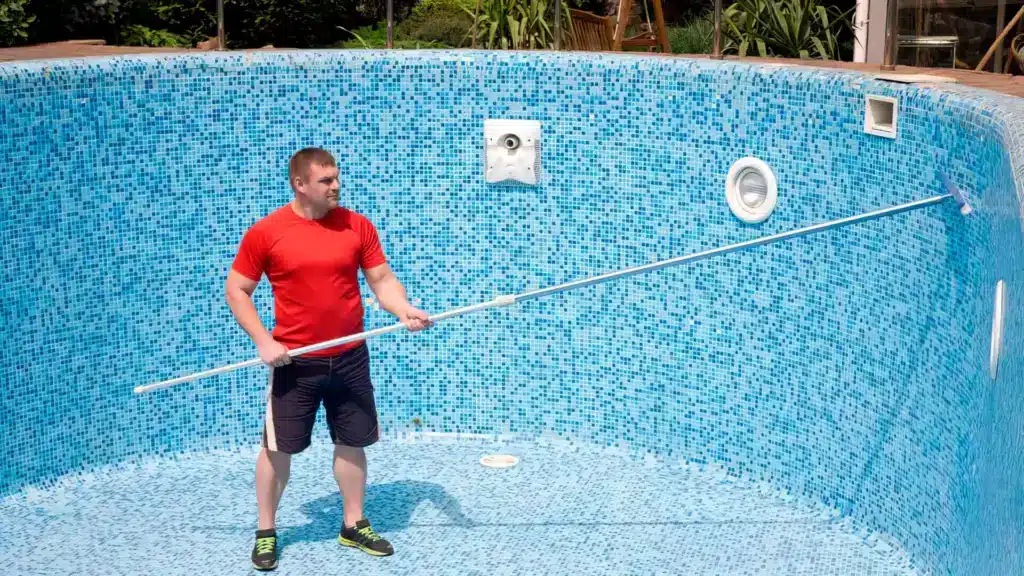
A guy in the center of a empty pool doing pool tile cleaning

Pool Tile Services Near Me | Professional Tile Cleaning & Repair Orange County Professional Pool Tile Services Near Me – Expert Cleaning & Repair Professional pool tile services near me restore your swimming pool’s beauty and protect your investment through expert tile cleaning, repair, and restoration services. Moreover, specialized pool tile services near me address calcium buildup, staining, and tile damage that affects both pool appearance and property values. 🧽 Transform Your Pool Tiles Today! Professional tile cleaning and repair services that restore your pool’s sparkling appearance. 📞 Call Now: (714) 904-8575 🏊‍♂️ Pool Tile Services Guide 1 ✨ Why Choose Professional Tile Services 2 🧽 Pool Tile Cleaning Services 3 🔧 Pool Tile Repair Services 4 🔄 Professional Cleaning Process 5 🪨 Calcium Removal & Restoration 6 💰 Service Pricing & Packages 7 ⭐ Choosing the Best Service Provider Serene Pools delivers comprehensive pool tile cleaning service near me throughout Orange County, specializing in calcium removal, stain elimination, and tile restoration that brings pools back to their original beauty. Additionally, our experienced technicians provide pool tile repair service near me that addresses cracked tiles, loose grout, and structural issues that affect pool integrity and appearance. Professional swimming pool tile cleaning service near me involves specialized equipment, expert techniques, and safe chemical processes that achieve superior results compared to DIY cleaning attempts. Furthermore, experienced providers understand different tile materials, appropriate cleaning methods, and damage prevention techniques that protect your investment while delivering exceptional results. Effective pool tile cleaning services near me address both aesthetic and functional concerns including calcium buildup removal, stain elimination, grout restoration, and preventive treatments that maintain tile condition longer. Moreover, professional service saves time and prevents costly mistakes that can damage expensive tile installations. Why Choose Professional Pool Tile Services Near Me Professional pool tile services near me deliver superior results through specialized equipment, expert knowledge, and proven techniques that safely restore tile beauty without causing damage. Moreover, experienced technicians understand tile materials, appropriate cleaning methods, and safety protocols that DIY attempts often lack. Expertise and Specialized Equipment Professional pool tile cleaning service near me utilizes commercial-grade equipment including pressure washers, acid washing systems, media blasting tools, and specialized chemicals that achieve results impossible with household cleaning supplies. Additionally, trained technicians understand how different tile types respond to various cleaning methods and adjust techniques accordingly. The Environmental Protection Agency provides guidelines for safe chemical handling and disposal that professional tile cleaning services follow to protect both workers and the environment. Therefore, professional service ensures compliance with environmental regulations while achieving optimal cleaning results. Time Savings and Convenience Professional pool tile cleaning services near me complete comprehensive tile restoration in hours rather than the days or weeks DIY efforts typically require. Furthermore, expert service eliminates the need for homeowners to purchase expensive equipment, learn complex techniques, or risk personal injury from chemical exposure. Damage Prevention and Warranty Protection Experienced pool tile services near me prevent costly damage through proper technique selection, appropriate chemical concentrations, and careful handling that protects both tiles and surrounding pool surfaces. Moreover, professional providers carry insurance coverage and offer service warranties that protect customers from potential damages or unsatisfactory results. Professional Advantage: Expert pool tile services near me achieve better results faster while protecting your investment through proven techniques and comprehensive insurance coverage. Comprehensive Pool Tile Cleaning Services Near Me Professional pool tile cleaning service near me addresses all types of tile contamination including calcium deposits, algae stains, mineral buildup, and organic discoloration through systematic cleaning processes that restore original tile appearance. Moreover, comprehensive cleaning services extend beyond surface cleaning to address grout restoration and protective treatments. Calcium Deposit Removal Specialized techniques for removing stubborn calcium buildup that clouds tile surfaces and affects pool appearance. Stain Elimination Expert treatment of organic stains, mineral discoloration, and chemical staining that affects tile beauty. Grout Cleaning & Restoration Deep grout cleaning and restoration that eliminates embedded dirt and restores original color. Protective Sealant Application Professional sealant application that prevents future staining and simplifies maintenance. Advanced Cleaning Techniques Professional swimming pool tile cleaning service near me employs multiple cleaning techniques including pressure washing, chemical treatment, media blasting, and manual scrubbing to address different contamination types and tile materials effectively. Additionally, technique selection depends on tile composition, contamination severity, and surrounding pool features. Advanced cleaning methods include acid washing for calcium removal, enzyme treatments for organic stains, pressure washing for surface contamination, and specialized brushing for delicate tile materials. Furthermore, professional technicians combine techniques as needed to achieve optimal results while protecting tile integrity. Tile Material Expertise Expert pool tile cleaning services near me understand how different tile materials including ceramic, porcelain, glass, stone, and mosaic tiles respond to various cleaning methods and adjust techniques accordingly. Moreover, material-specific approaches prevent damage while maximizing cleaning effectiveness for each tile type. Professional Tile Cleaning Process: Comprehensive tile and grout inspection Water level adjustment and area preparation Pre-treatment chemical application Specialized cleaning technique implementation Grout cleaning and restoration Post-cleaning inspection and touch-ups Protective sealant application (if requested) Final quality inspection and cleanup Expert Pool Tile Repair Service Near Me Professional pool tile repair service near me addresses cracked tiles, loose installations, grout deterioration, and structural issues that affect both pool appearance and water integrity. Moreover, expert repair services prevent small problems from becoming major renovations through timely intervention and quality workmanship. Common Tile Repair Issues Professional pool tile repair service near me handles various problems including cracked or chipped tiles, loose tile installations, deteriorated grout lines, and missing tiles that affect pool functionality and appearance. Additionally, experienced technicians identify underlying causes such as structural movement, chemical imbalance, or installation defects that contribute to tile problems. Repair Issue Symptoms Professional Solution Cracked Tiles Visible cracks, water seepage Tile replacement and waterproof sealing Loose Tiles Tiles shifting or falling off Adhesive renewal and proper reinstallation Grout Deterioration Crumbling or missing grout Complete grout removal and replacement Stain Penetration Deep stains that won’t clean Tile replacement or refinishing Tile Discoloration Permanent color changes

The Best Guide to Pool Maintenance

Serene Pools Worker Doing Pool Maintenance in Orange County

Ultimate Guide for InGround Pool Maintenance 101: Weekly, DIY, and Pro Tips for Beginners and Experts Ultimate Guide to Pool Maintenance: Weekly, DIY, and Pro Tips for Beginners and Experts CALL NOW FOR INGROUND POOL MAINTENANCE 101 Expert Pool Care & Maintenance Services (714) 904-8575 Professional Pool Maintenance | Free Consultation | Same Day Service Table of Contents What is Pool Maintenance? Why Is Regular Pool Maintenance Important? Weekly Pool Care Checklist Chemical Balancing 101 How to Keep Pool Water Clean Tools You Need to Keep a Pool Clean Pool Maintenance for Inground vs Above Ground Pools Signs Your Pool Needs Immediate Repair Common Questions About Pool Maintenance When to Hire a Professional Pool Service Pool Maintenance by Season Final Thoughts + CTA What is Pool Maintenance? Pool maintenance encompasses every task required to keep your swimming pool clean, safe, and functional year-round. Moreover, effective pool maintenance involves regular cleaning, chemical balancing, equipment monitoring, and preventive care that protects your investment while ensuring crystal-clear water. Furthermore, comprehensive pool maintenance includes three core components: physical cleaning, chemical treatment, and equipment upkeep. Initially, many pool owners underestimate the time and expertise required for proper maintenance. However, understanding these fundamentals empowers you to make informed decisions about DIY care versus professional pool service. Additionally, proper pool maintenance extends far beyond skimming leaves and adding chlorine. Consequently, successful pool care requires consistent monitoring of water chemistry, filter performance, circulation systems, and seasonal adjustments. Therefore, whether you’re managing a residential backyard pool or overseeing commercial pool facilities, systematic maintenance prevents costly repairs and health hazards. For comprehensive guidance on choosing the right pool size that affects your maintenance requirements, explore our detailed sizing guide. Need Professional Pool Maintenance Help? Expert technicians available for all your pool care needs (714) 904-8575 Why Is Regular Pool Maintenance Important? Regular pool maintenance protects your health, preserves your investment, and prevents expensive emergency repairs. Subsequently, neglected pools develop algae blooms, equipment failures, and structural damage that cost thousands to remedy. First, consistent pool maintenance ensures safe swimming conditions by maintaining proper chemical balance and eliminating harmful bacteria. Moreover, balanced water prevents skin irritation, eye discomfort, and waterborne illnesses that affect swimmers of all ages. The Centers for Disease Control and Prevention emphasizes proper pool chemistry as essential for preventing recreational water illnesses. Second, routine pool maintenance preserves equipment longevity and prevents premature replacement costs. Furthermore, clean filters, balanced water chemistry, and proper circulation reduce strain on pumps, heaters, and automation systems. Consequently, well-maintained pools operate efficiently for decades with minimal major repairs. Third, regular pool maintenance maintains property value and aesthetic appeal. Additionally, sparkling pools enhance outdoor living spaces and attract potential buyers in real estate markets across Orange County, Los Angeles, Riverside, and San Bernardino Counties. For professional pool maintenance in Los Angeles, expert services ensure optimal care for your investment. Finally, proactive pool maintenance costs significantly less than reactive repairs. Therefore, weekly care prevents green pool recovery, equipment replacement, and surface refinishing that devastate maintenance budgets. Weekly Pool Care Checklist Effective weekly pool maintenance follows a systematic approach that addresses cleaning, chemical testing, and equipment inspection. Moreover, consistent weekly routines prevent problems before they develop into costly issues. Pro Tip: Weekly Maintenance Schedule Following a consistent weekly schedule ensures nothing gets overlooked and maintains optimal pool conditions year-round. Monday: Skimming and Surface Cleaning Initially, remove debris from the pool surface using a leaf skimmer or automatic surface cleaner. Furthermore, empty skimmer baskets and pump strainer baskets to maintain optimal circulation. Additionally, brush pool walls and steps to prevent algae attachment and calcium buildup. Wednesday: Chemical Testing and Balancing Test water chemistry using reliable test strips or digital testing equipment. Moreover, check chlorine levels, pH balance, total alkalinity, and calcium hardness. Subsequently, adjust chemicals as needed to maintain optimal ranges: pH 7.2-7.6, chlorine 1.0-3.0 ppm, alkalinity 80-120 ppm. The Environmental Protection Agency provides detailed guidelines for safe pool water chemistry standards. Friday: Vacuuming and Filter Maintenance Vacuum pool floors and walls using manual or automatic cleaning systems. Furthermore, inspect and clean pool filters according to manufacturer specifications. Additionally, backwash sand filters or rinse cartridge filters to maintain proper filtration efficiency. Weekend: Equipment Inspection Check pump operation, timer settings, and automation systems for proper function. Moreover, inspect pool equipment for leaks, unusual noises, or performance issues. Finally, document maintenance activities and chemical readings for future reference. When equipment issues arise, our pool pump replacement services provide expert solutions to keep your system running smoothly. Equipment Problems? Get Expert Help! Professional diagnosis and repair services available (714) 904-8575 Chemical Balancing 101 Chemical balancing represents the most critical aspect of pool maintenance, directly affecting water safety and equipment longevity. Therefore, understanding water chemistry fundamentals empowers pool owners to maintain healthy swimming conditions. Critical Water Chemistry Ranges pH: 7.2-7.6 | Chlorine: 1.0-3.0 ppm | Alkalinity: 80-120 ppm | Calcium: 150-300 ppm Understanding pH Levels pH measures water acidity or alkalinity on a scale from 0 to 14. Moreover, ideal pool pH ranges between 7.2 and 7.6, slightly alkaline for swimmer comfort and chlorine effectiveness. Furthermore, low pH causes equipment corrosion and skin irritation, while high pH reduces sanitizer efficiency and creates cloudy water. Chlorine: Your Primary Sanitizer Chlorine eliminates bacteria, viruses, and algae that threaten swimmer health. Additionally, maintain free chlorine levels between 1.0 and 3.0 parts per million for optimal sanitization. Moreover, shock treatments with higher chlorine concentrations eliminate organic contaminants and restore water clarity. Total Alkalinity Buffer Total alkalinity stabilizes pH levels and prevents rapid chemical fluctuations. Subsequently, maintain alkalinity between 80 and 120 ppm for consistent water balance. Furthermore, proper alkalinity reduces chemical consumption and simplifies ongoing maintenance. Calcium Hardness Protection Calcium hardness prevents equipment corrosion and surface etching in pools with soft water. Therefore, maintain calcium levels between 150 and 300 ppm in most pool situations. However, areas with naturally hard water may require different management approaches. How to Keep Pool Water Clean Crystal-clear pool water results from effective filtration, proper circulation, and consistent chemical maintenance. Moreover,